Text “CRASH” and a tow truck is on its way to your phone's location2 and a licensed attorney contacts you for free.1 AAA accepted. Free to you — paid for by the tow operators and attorneys who advertise on the network.
Type ###########, type CRASH, and the reply is instant. Share your location with one tap. A tow truck heads your way if you want one; a licensed attorney calls you.
No app, no account, no 1-800 number to remember.
Your location is automatic when you allow it with a tap. Feel free to briefly describe what happened, your name, your car — all optional. One sentence is enough.
A tow truck heads your way if you want one — free with AAA.2 A licensed attorney calls you with your details already in hand. No out-of-pocket cost for any attorney on the network — they only get paid if you win.1
You never pay Atlas Project anything.
Most people have no idea — MedPay, UM/UIM, deductibles — until the day they need it. After you text CRASH, we'll offer a link to connect your policy. You sign in with your own insurer (your password never reaches us), and within a minute you get a plain-English readout: what pays your medical bills right away, what covers you if the other driver has no insurance, and what your deductible is. The same details go to the attorney who calls you, so nobody has to ask you twice.6
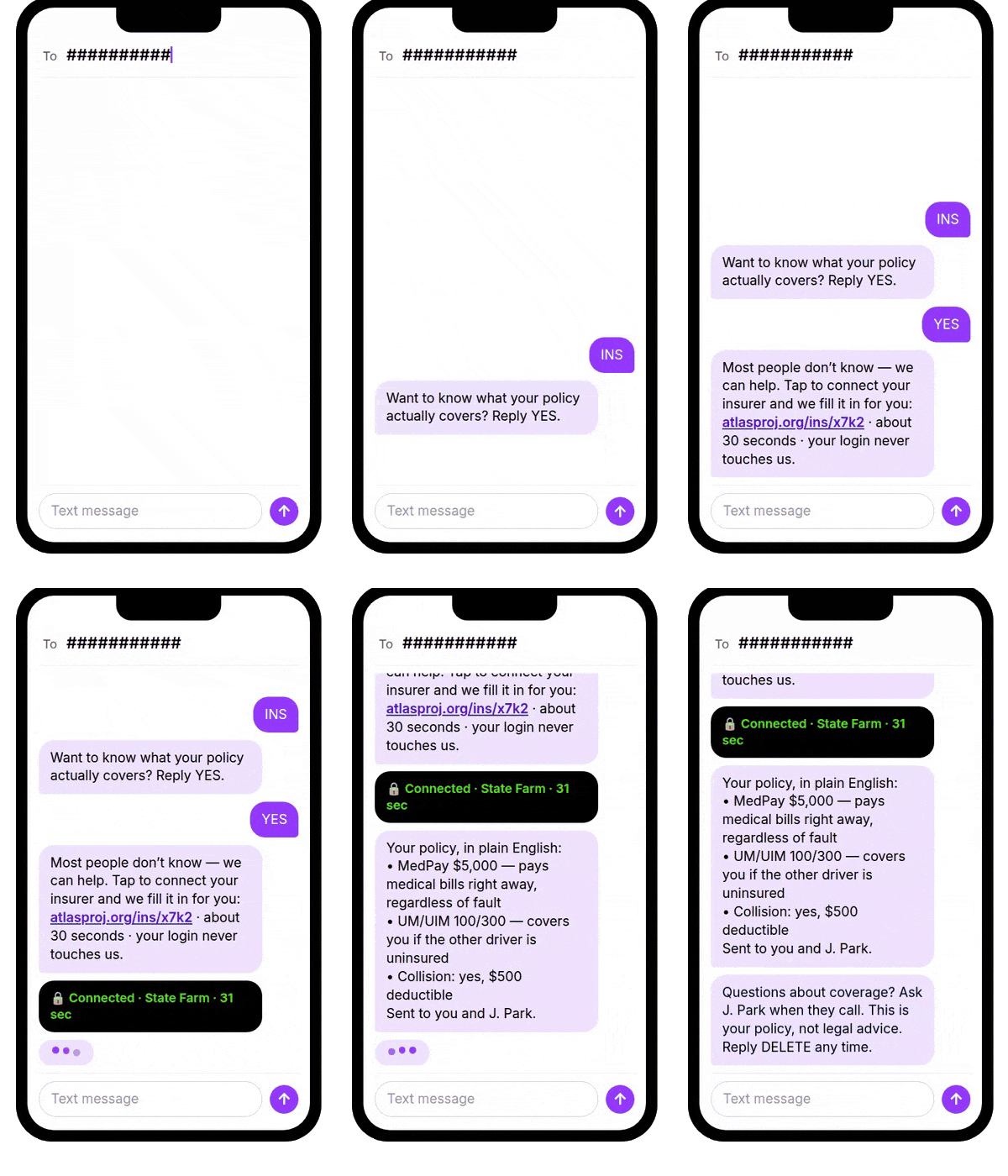
Reply INS → connect → your policy in plain English
The text is free. Talking to the attorney is free. Every attorney on Atlas Project works on contingency: no out-of-pocket cost, and they only get paid if you win — a share of your settlement, never a bill.1
Stop trying to memorize a lawyer's name and phone number. Text ########### and “CRASH”. It's free.
After you share your location, we text you the names of the licensed attorneys advertising near you — and you pick one. The list is filtered to the kind of crash you had and rotated evenly; Atlas Project never picks for you and never ranks anyone.
Every one of them holds an active California State Bar license, has no public discipline on record, carries malpractice insurance, and works on contingency. You're always free to use any attorney you choose.4
The short, no-nonsense version of what to do in the minutes, hours, and days after a crash in Los Angeles. Tap a question to open it. When you're ready, text “CRASH” to ########### and we'll handle the attorney and the tow.
Stop, breathe, and check for injuries. If anyone is hurt, unconscious, or trapped, call 911 before anything else. If the cars can move and no one is seriously hurt, pull to the shoulder or the nearest safe spot — freeway lanes are the most dangerous place to be. Turn on your hazards, set the parking brake, and get out on the side away from traffic. Stay off your phone for anything except 911 and Atlas Project until you're safe.
Yes, if there's any injury, a hit-and-run, a driver who seems impaired or uninsured, or the other driver won't cooperate. In California you must report a crash to the police or CHP within 24 hours if anyone was injured or killed, and you must file an SR-1 form with the DMV within 10 days if anyone was hurt or the damage looks like more than $1,000. For a fender-bender with no injuries, LAPD may not come out — take photos, trade info, and file the report yourself. A police report number makes the insurance claim far easier.
Name, phone, address, driver's license number, license plate, insurance company and policy number, and the car's year, make, and model. Photograph their license, insurance card, and plate instead of writing it down. If a passenger or witness saw it, get their name and number too — witnesses disappear fast. Never hand over your Social Security number, and don't argue about who was at fault.
Take more than you think you need, from more angles than feel necessary: all four corners of every car, close-ups of each dent and scrape, the other car's plate, skid marks, debris, traffic signs and signals, the road surface, the weather, and the wider scene showing where the cars ended up. A 20-second walk-around video is gold. Screenshot your phone's map location. Do it before the cars are moved if it's safe to.
Don't say “I'm sorry,” “it was my fault,” or “I'm fine.” You're shaken, you don't have all the facts, and those words get quoted back later. Be polite, be factual, and let the police report and the evidence speak. The same goes for social media: don't post about the crash. And don't give a recorded statement to the other driver's insurance company — you're not required to, and it's their job to pay you less.
Yes. Adrenaline hides injuries; whiplash, concussions, and soft-tissue injuries often show up a day or two later. Get checked the same day at urgent care or your doctor, and follow through on any treatment. A gap between the crash and your first visit is the first thing an insurer uses to argue you weren't really hurt.
If anyone was injured — even a little — talk to one before you talk to an insurance adjuster. Adjusters settle claims quickly and cheaply; a licensed attorney knows what your medical bills, lost wages, and pain and suffering are actually worth, handles every call and form, and negotiates from experience. Crash attorneys work on contingency: no upfront cost, and they're paid only from what they recover for you. Studies from the insurance industry itself show represented claimants recover more, even after fees. In California you generally have two years from the crash to file an injury claim and three for property damage, and evidence gets weaker every week. That's why Atlas Project puts a licensed attorney on the phone with you within minutes, free.1
Only accept a tow you or the police called. In California it's illegal for a tow truck to stop at a crash and offer service uninvited — those “bandit” tows lead to inflated bills and cars held hostage in distant yards. If your car can't be driven, text TOW to ###########, use your AAA membership, or ask the officer for the official police tow. Before the hook goes on: ask for the rate sheet (California law requires it), get the driver's name and company, confirm exactly where the car is going, and take a photo of the truck and its plate. Grab your valuables, registration, and insurance card before it leaves. You choose where your car goes — a repair shop you trust beats a storage yard that charges by the day.
Hit-and-run: don't chase. Note the plate, color, make, and direction, call 911, and look for cameras on nearby businesses or homes. Uninsured or underinsured driver: your own policy's uninsured-motorist coverage (UM/UIM) is what pays — most California drivers have it and don't know it. In both cases an attorney can find coverage you didn't know applied; you're not stuck.
Yes, promptly — most policies require it, and waiting can void coverage. Stick to the facts: when, where, who, and what the damage is. Don't guess at speeds or fault, and don't accept a quick settlement before you know the full extent of injuries and repairs. If the other side's insurer calls, you can simply say your attorney will contact them.
Rideshare crashes involve up to three insurance policies (the driver's, the rideshare company's, and yours), and which one pays depends on whether the app was on. Motorcyclists, cyclists, and pedestrians are hurt more and blamed more. In every case: photos, medical care, and an attorney before an adjuster. Text ########### the word that fits — UBER, MOTO, BIKE, WALK — and we'll match you accordingly.
No. Atlas Project is a free text service for everything after the emergency — we're the second responders. Text “CRASH” to ###########, share your location with a tap, and a tow truck and a licensed attorney are dispatched to you. We never dispatch police, fire, or medical help; if anyone is hurt, call 911 first. Free to you, no app, no account, your data never sold.3
